
Beta late than never
the friction between looking well and feeling healthy

I read the de-bunking article about the niche I inhabit, de-frazzling your life and it almost killed my dream weave. Almost.
Thankfully the rise of being a beta mom allowed me the grace to finalise this edition, by reminding me that friction, not chaos, is the difference between preservation and participation.
Just in a time an old school friend, Annie Landless, popped up on my Linkedin, about her farm featuring in the latest Country Life to talk about the future of farming, soil and dung beetles and I started to follow Anna-Marie Julyan .
Everything I was interested in lately (see notes) from regenerative farming practices, wonky carrots, lifestyle medicine gravitated around the theme of Beta - the software development term for the almost perfect code, that adapts to the real conditions it inserts into before completion. So the theme of this edition coalesced:
Beta systems become alpha not when they are perfect, but when they are stable enough to survive contact with the real world.
And perhaps that is partly why this whole longevity conversation keeps pulling at me. Increasingly it feels as though modern life is asking us not merely to survive, but to remain aesthetically, emotionally and professionally unchanged throughout our lives and exist without visible signs of any effort taking place in doing so. Asked recently by a family member, whether the title of my substack was “sending the right message”, I thought quietly, since the question was being asked that yes, yes it was.
I know very little about soil truthfully, or worms, beyond what most people probably know. Recently, my family friends from Scotland, where I grew up, and who are cattle farmers, came by in their new camper. We discussed farming. They aren’t organic. I asked about what their ideas are on the future of farming. I took away the importance of their farm, and priority to feed people, that yields matter, that food security matters, and that romanticising “organic” systems without acknowledging production realities is easy to do from a distance. I can appreciate that, but something about the conversations regenerative farmers are having, like my old school friend, keeps reminding me of the conversations medicine is now trying to have around prevention, lifestyle medicine and what enables people to remain healthy for longer, like the soil.
Farmers challenge regenerative farming practices with arguments about productivity and food security, that if all farms were organic, production would fall, and people would go hungry overnight. Doctors sometimes challenge traditional family medicine in almost the same language; that continuity is an inefficiency or that lifestyle medicine is for those who have, not who have not despite better patient outcomes.
The parallels started pulling at me in a way I couldn’t quite ignore. I began wondering if arguing that organic farming and lifestyle medicine are luxuries available only to people with enough money and time to access them properly had any truth to it at all. Shouldn’t good nutrition, movement, time outdoors, lower stress and preventive medicine be the very soil that all medicine grows from?
I notice both conversations seem to circle the same anxiety underneath; how do you keep something productive without quietly exhausting the very sustaining thing itself. I reflected on the hype of the incredibly chic book by a swiss 20 something year old, that plays on the old-traditional-often bemoaned aristocratic hungarian past of his heritage, bringing the running theme in Lázár, that entire generations can become beautifully cultivated yet fundamentally detached from the very things sustaining them felt gratifying to get. The book made me feel less antiquated about my ideals of being a quintessential GP, and gave me feels that I was simultaneously uncomfortably modern and chic Pandora Sykes.

I was feeding our three guinea pigs when all my machinations began to align and notes tied up the ravelled sleeve of care. I thought, when shoppers asked for carrots to be straighter, easier to chop, prep, they began being selected and altered, then mass-produced for supermarket shelves and holding a very wonky one in that moment gave me the clarity that they are probably the perfect metaphor for modern wellness culture.
Uniformity looks efficient, controlled, boundaried, predictable, and yet maybe thats why they lost their flavour and all the richness of a “wonky carrot” compromised in the pursuit of consistency and scale - longevity. Soil pushed to endlessly produce without changing growing or replenishing, eventually loses it’s complexity too. The land still functions, but something underneath it quietly depletes.
I increasingly wonder whether we are doing something similar to ourselves, and to medicine.
Life expectancy
The recent BBC reporting on healthy life expectancy should probably have unsettled us far more than it did. Because the implication was not simply that people are living longer. It was that many people are arriving at older age in poorer physical and psychological condition than we imagined modernity would deliver. Longer lives an apparant win, but not when those years are shaped by chronic disease, isolation, anxiety, frailty, medication and disconnection from movement, community and purpose, exacerbated and likely not fully culturally recovered (like NHS waiting lists) the pandemic.
We have become extraordinarily good at extending lifespan while often struggling to create lives that actually feel nourishing to inhabit or that show any signs of living at all.
At the same time, younger people are moving less than any previous generation. Entire childhoods now occur indoors, under artificial light, through screens, inside systems increasingly designed for convenience and stimulation rather than development. Listening recently to discussions at Parliament around children’s health and movement, it became difficult not to notice the same themes emerging repeatedly;rising mental illness, delayed physical development, narrow inequal access to activity and nature. The message from the Class of 2035 Commission is clear children are becoming increasingly detached from their own bodies and the Youth Sport Trust is going Beta - redefining what the conditions are for flourishing.
Can we act surprised when adulthood arrives before wellness?
The recent Wall Street Journal piece on comfort and quality of life touched on something similar too. In our attempts as parents, doctors, leaders, teachers, to engineer convenience and comfort into every aspect of modern life we may paradoxically be reducing resilience and wellbeing itself in ourselves and those who matter the most. By denying the unadulterated environment for the beta child, the code cannot adapt. wellness is not frictionless.
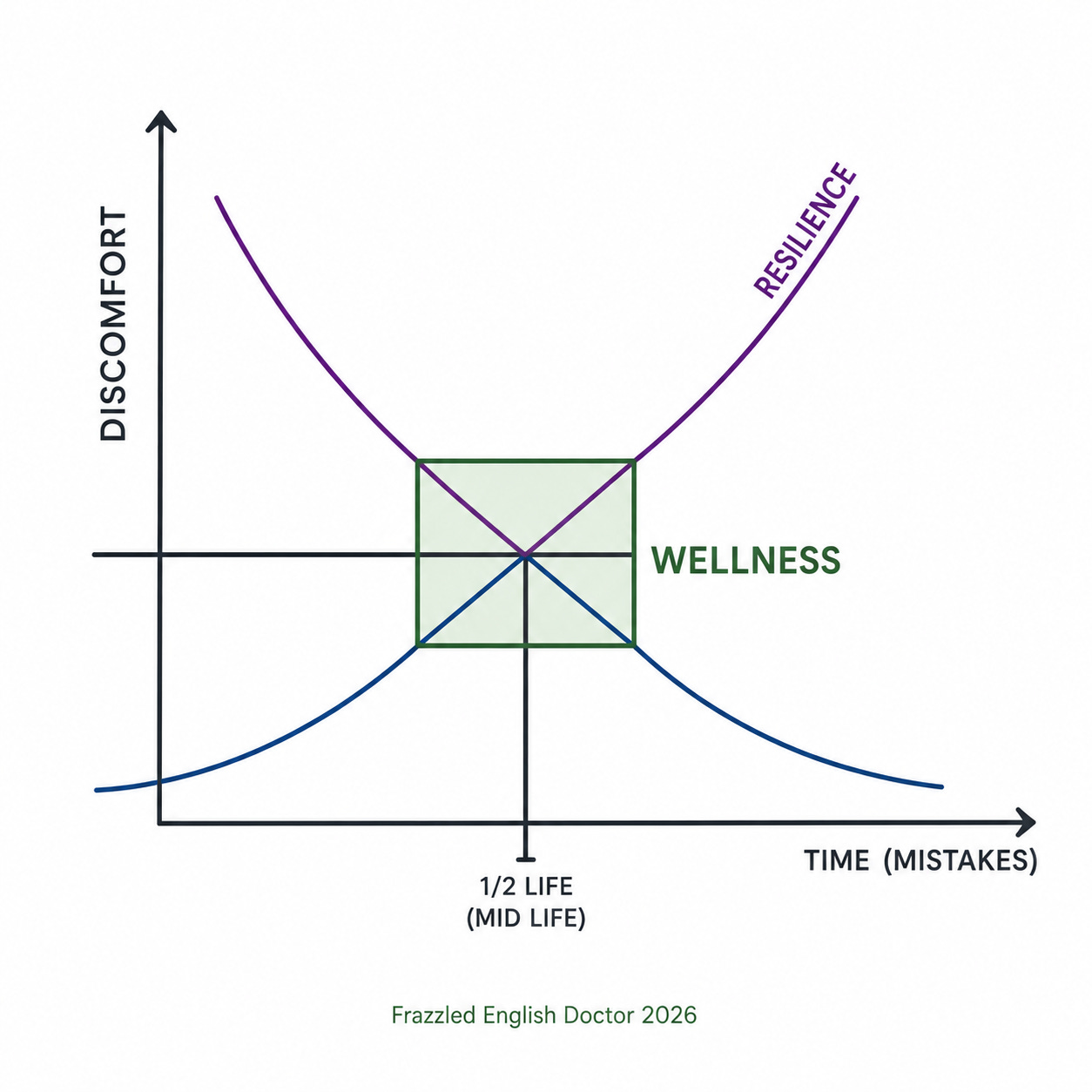
I made this on a napkin so to speak, posted as a note a few weeks ago, imagined that I was a radioactive isotope, and the more mistakes I made, my discomfort exponentially fell.
Exploring Longevity Medicine
genuinely interests me because at its best it feels deeply human. Helping people remain physically capable of inhabiting their own lives. Helping people stay connected to movement, food, sleep, purpose, relationships, sunlight, strength, community and the physical world around them. But culturally longevity increasingly seems to drift towards optimisation instead, as though the highest goal is to remain aesthetically “well” indefinitely The Skeptical Cardiologist .
And for women especially, ageing itself increasingly appears treated almost as evidence of insufficient effort.
I sometimes wonder whether we are celebrating women reaching 75 now, or celebrating women reaching 75 without appearing as though the years between 35 and 75 actually happened to them Jameela Jamil
When older men are admired culturally, age itself often becomes part of the attraction towards the lined face, the weathered hands, the grey hair, the evidence of time. We associate it with character, authority, experience, just look at Jeff Bridges - so manly.
Women, meanwhile, still seem required to age successfully in order to remain visible at all.
As though longevity itself is no longer enough. We must remain aesthetically coherent throughout it too.
And perhaps this is why modern wellness culture feels quietly exhausting. It is no longer simply about health, or even living longer, but about maintaining seamlessness through time itself.
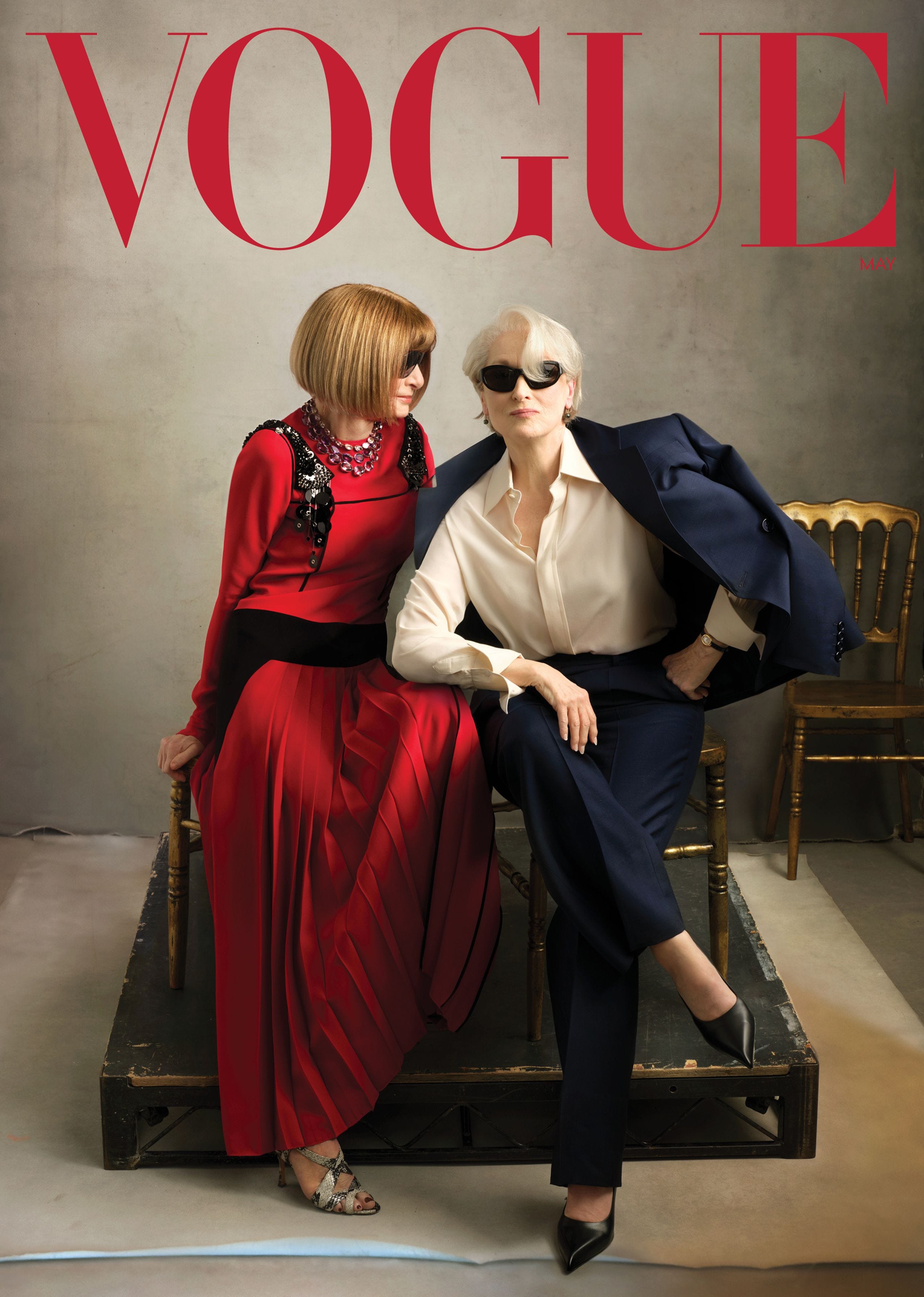
Miranda Priestly in The Devil Wears Prada represented the pinnacle of polished performance and immaculate self-control. Yet seeing Meryl Streep on the cover now felt as though the cultural question had subtly shifted. Less “how do we remain perfect?” and more “how do we remain alive?”
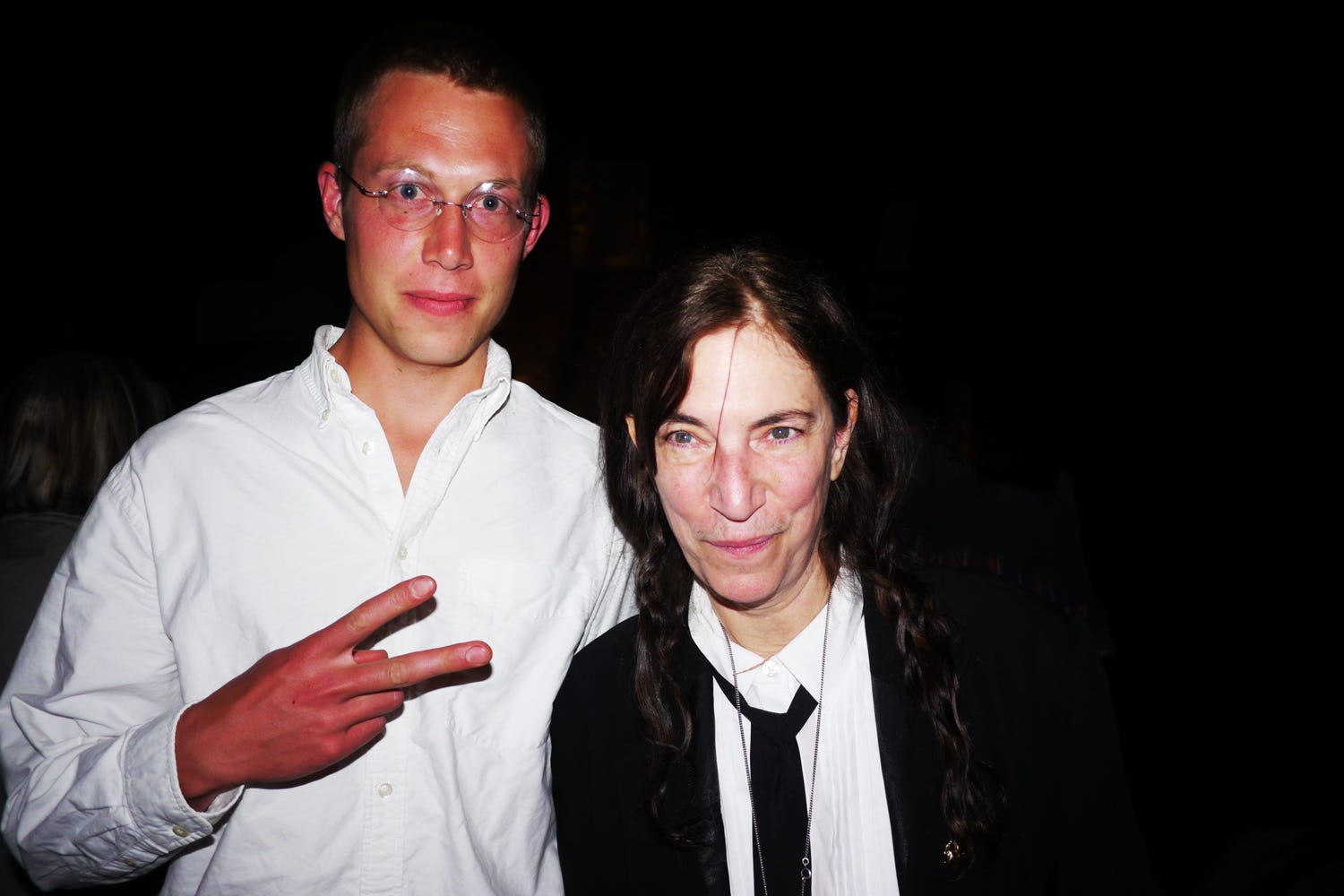
But then I think about Patti Smith and in the recesses of my messiness, I recalled my brother sending the family email (yes, no whatsapp then) this photo, my big brother. So Cool. He watched her perform privately at the Detroit Institute of Arts, inside the Diego Rivera mural room she loved when she lived in Detroit. Her son played guitar. Her daughter piano. One night only. Art returning to the point that inspired it. Life involuting. Wow, I gasped, seeing the picture now compared to back then, early 20s, I only saw my cool brother. Now I could see only Patti Smith. I felt good I was so changed.
I say that because she feels important here, nobody looks at such a powerful figure and thinks she didn’t try, that she’s untouched, or unwell. Health exudes from the photograph. I could see maybe next to my brother, and from a different lens this time viewing, all the nuances, adaptations, beta signs that stand out to me, the carried time, grief, poetry, motherhood, music, loss, joy, lovers….years. She has not remained perfectly preserved. She has remains reachable by life.
And yet the clean girl trend, now CBK look epitomised by the on trend tortoiseshell 90s headband Style Analytics seems to be another unmet target for women and girls I see every day apologising for their bodies - since appearing effortlessly untouched is the new cultural norm, and more important than the language or experience of their own body. I hear them apologise “Sorry my c-section scar is ugly, Sorry I didn’t shave, Sorry my legs are gross, Sorry I am on my, you know”… and then this by Vogue, and they call it the old money manicure.
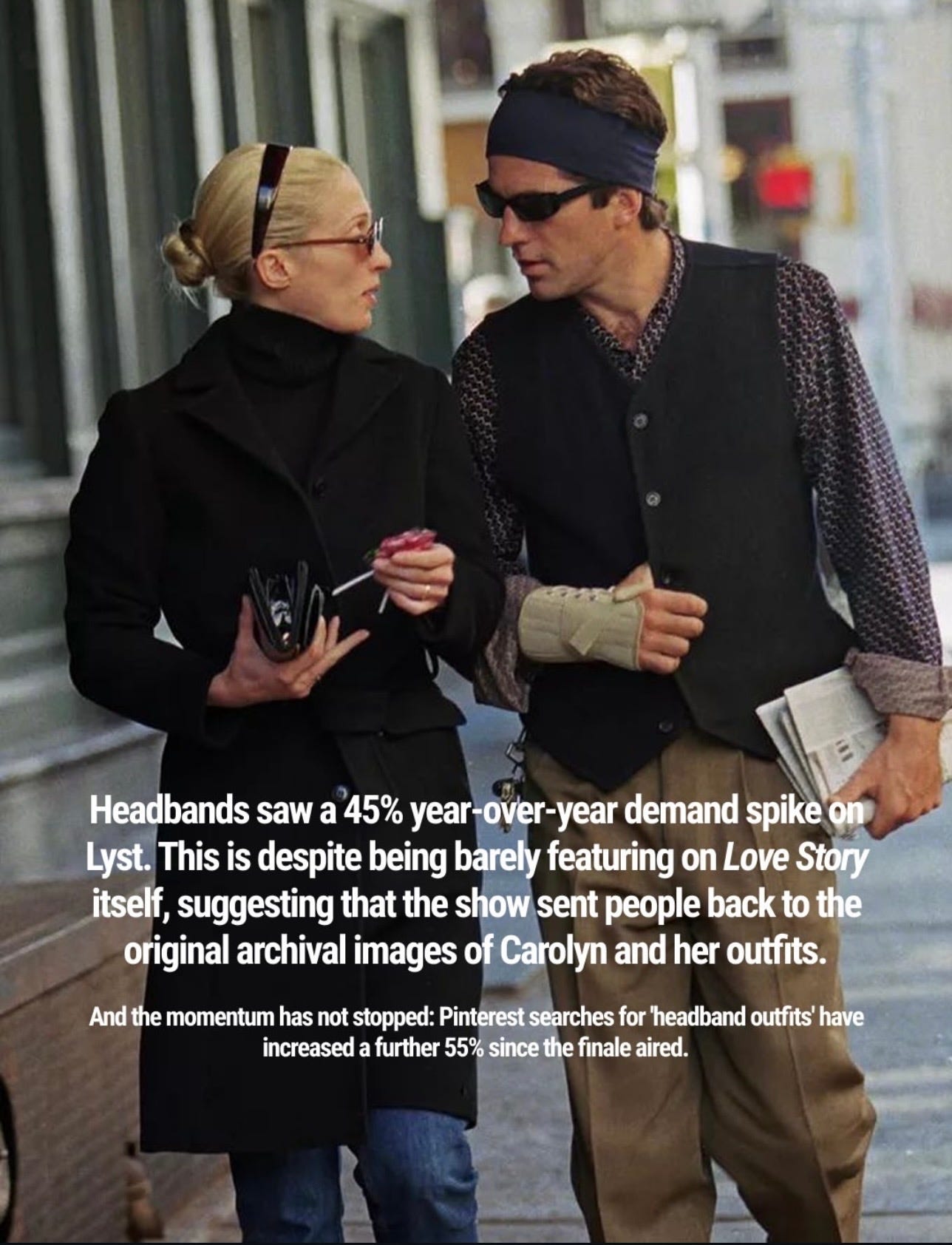
The old money hands that I have examined, are used. For gardening, hunting etc. A manicure might be reserved for weddings and racing events. Old money is certainly less clean girl pink, more pragmatic frugal hues of grey (which admittedly doesn’t make a good nail colour). The sort of hands that measure a line in the bathtub so as not to use too much water, because spending the “old money” reserved for the next generation is, not done.
The original appeal of the “frazzled Englishwoman” was never really chaos, more a sense that living had occurred in the room before you entered it. It was evidence like squashed cushions, piles of books, dogs under tables, children, missed emails, visible effort, but even frazzle itself seems required to remain aesthetically “right”. Perhaps that is why it feels maddening - not just undone, but beautifully, organised underneath, the room, and the woman, productive and fit as well as emotionally available, intellectually curious, professionally successful and photogenic at the same time, of course beside a basket of heritage carrots. Inviting mess, but only tolerable when it remains aspirational.
The version of “frazzled” that first resonated with me, and is why I put pen to paper here, has never really been about disorder, but authenticity so that I can be a role-model to my children, and not hypocritical to myself or my patients or them. Professionally, there are advantages too, I can engage with the difficult, physical, emotional business of medicine, and connect with my patients more naturally when I firstly haven’t been endlessly curated. “Frazzled” does not resemble collapsed, or dysfunctional, overwhelmed, or struggling, just, interrupted. like children had moved through it, somebody had cooked, read, cried, worked late, forgotten flowers in a vase, visible living not giving up.
Sadly much of modern femininity revolves around concealment. The “clean girl” was perhaps only the digital endpoint of this. A face with no friction in it. The woman who appears overwhelmed but remains physically toned, sexually attractive, creatively fulfilled, professionally successful and emotionally articulate is just the same chaos just consumable.
And maybe that is why Patti Smith feels so important to me in contrast - she makes me feel that time is not the same as age, and that it can feel infinite. That sort of timeless elegance and style is a huge sense of comfort to me, especially when my 4 year old cries, “I don’t want you to change mummy” to which I answer with, “I have stopped growing on the outside, but I keep growing on the inside”.
Longevity can slip very quickly into preservation culture meaning that looking well becomes how to externally and metabolically remain unchanged by living and we become less a home and more a project under permanent surveillance that views ageing as a reversible personal failure of sorts
we can all end up reinforcing this sometimes, even unintentionally so that looking well becomes:
Optimise harder. -
Sleep better. -
Lift weights. -
Take collagen. -
Track biomarkers. - all the biomarkers
Hydrate. -
Preserve. -
Perhaps to remain physically capable, socially connected and emotionally aware over time and feeling healthy is more:
walk somewhere unnecessarily - adapt more gently, accept slower
rest when needed - sleep badly after grief
carry real things - lift shopping, pets
share a table with those you love
notice how you feel - be connected to your body
occasionally forget your water bottle, stay outside longer
remain reachable, let the dog muddy the kitchen
This may account (although outside of my area of expertise here) in some way to the increases in our population reporting they are feeling psychologically unwell despite unprecedented comfort and technological advancement. We have reduced enormous amounts of physical hardship, disease and insecurity, and that matters enormously. But perhaps somewhere along the way we also reduced too many opportunities for development of competence, boredom, adaptation, recovery, interdependence and meaningful difficulty.
Children especially seem to absorb this atmosphere immediately. The departure of the tiger mom is also the exorcism of the type A parent that historically robs their child of their own self-worth and self-belief in order to feed its own. Children find less connection, and more correction before confidence even has a chance to consolidate. Protected before resilience can develop. Entertained before imagination emerges. Observed and measured constantly. Optimised obsessively.
My daughter recently told me she loves writing but worries she writes too much. It struck me that children increasingly seem corrected before confidence has consolidated, as though imperfection itself has become intolerable. schools that promote aspirational parents terrified of their own failure. Patients terrified of uncertainty. The headmaster who asks you to imagine your child playing tennis as you look around, pausing to point out where you will watch through the glass pavilion with some champagne children learn to feel your expectation, before your presence.
Even resilience itself has become aestheticised now, packaged into routines and “doing hard things”, and we forget that resilience is not a characteristic, it arrives unwillingly it cannot be taught or learned, instead it grows within you when life keeps asking things of you after difficult things happen, not because your were strong, but because you carried on when you didn’t think you could, and with mistakes acruing over time, discomfort exponentially drops, so your midlife corresponds with the 1/2 life (imagining isotope decay - like carbon 14) and wellness can thrive.
I think what Annie is saying, is that there is value within the soil itself for carrying the memory of seasons before it, and is evidence something has actually lived, Extending lifespan does not automatically create wellness, meaning, vitality or emotional aliveness. Relentless optimisation carries a cost.
Farming with nature offers a pointer for medicine, education and public health, towards providing investment and funding for providing sustainable conditions for thriving, not parameters we simply control for surviving.
This matters most in childhood.
Doing the basics well matters enormouslyl. Reducing vaping, reducing excessive screen exposure, improving movement, sleep, outdoor play, social connection, nutrition and physical confidence in young people should not sit separately from conversations about longevity or lifestyle medicine. They are the foundation of them. The future of adolescent health likely depends less on optimisation later in life, and more on whether children grow up physically and mentally engaged in their world in the present.
“Beta late than never “ultimately is my take on regenerative farming in medicine, conditions that nourish and enable any individual to flourish since you do not need to be born with grit, you can cultivate it by making mistakes, digging deep, digging in, and in the discomfort the stamina for life grows.
Trees do not avoid the changing seasons or the weather. They grow through it. The rings, the gnarled trunk. Shakespeare seems apt here “love is not love
Which alters when it alteration finds,
Or bends with the remover to remove.
O no, it is an ever-fixèd mark
That looks on tempests and is never shaken”
To thrive, we cannot avoid the first arrow (the illness, or injury), but we can chose not to fire the second arrow at ourselves for no number of biomarkers will ever truly discern between the absence of disease and the presence of healthy body mind and soul.
xoxo
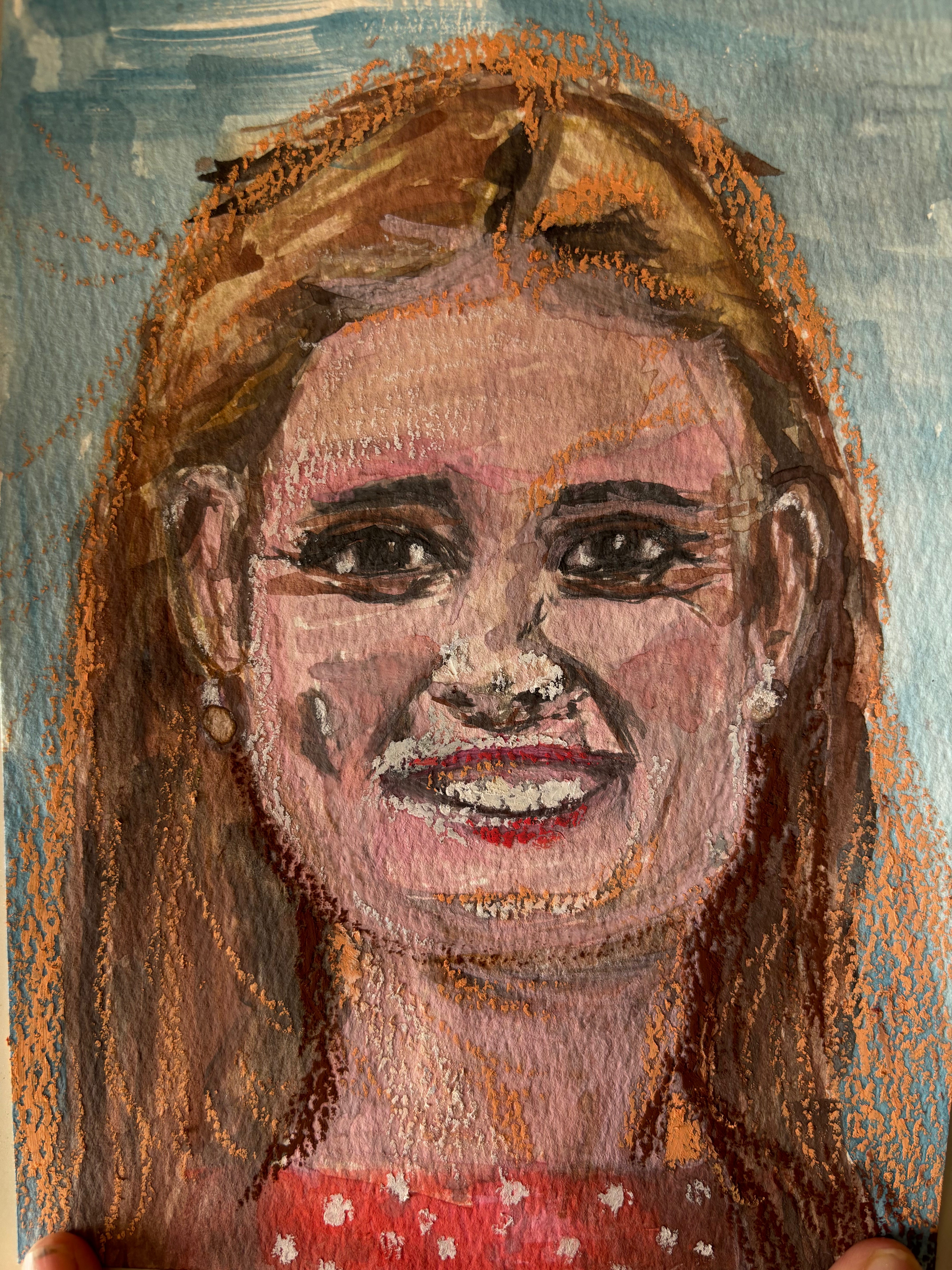
A watercolour, and oil pastel on cotton, for my friend as she returned following the birth of her first child last week. She is an army doctor, and as imperfect as this (only the second) portrait feels to me, it said more than I could have about what her friendship has and means to me.
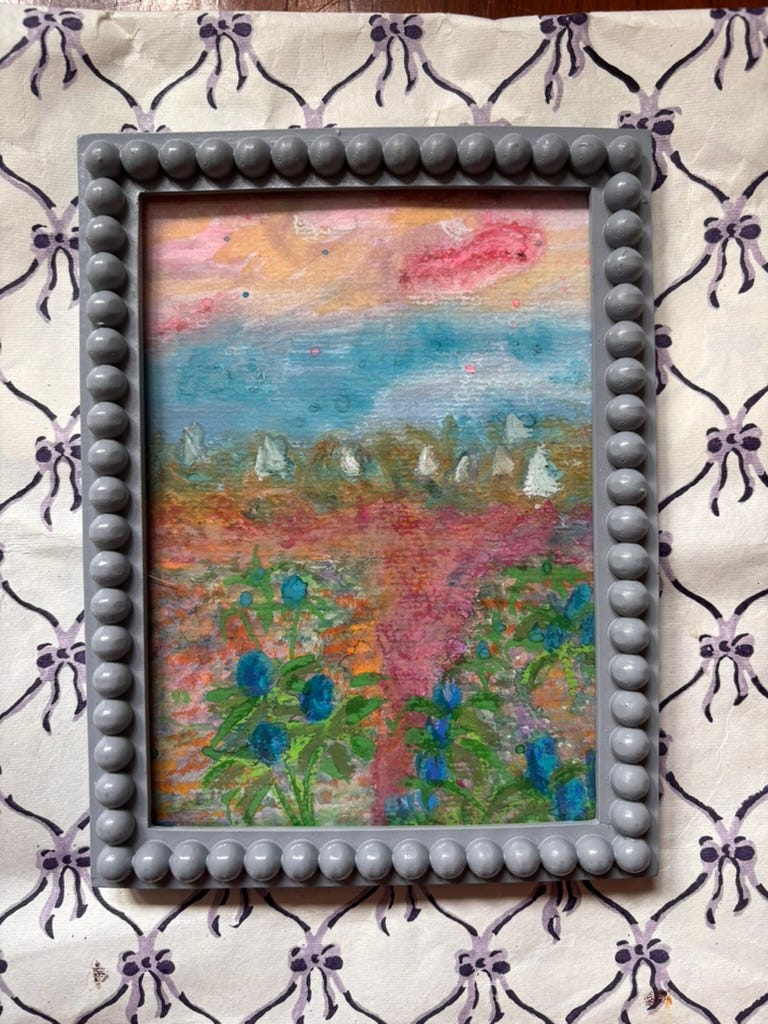
Sea Holly for my friend who recently lost her husband to cancer
Hey — I came across your writing and really liked how you think.
I’m exploring something similar from a different angle — writing about human behavior through a system design lens (like debugging internal patterns).
Just started publishing on Substack. If you ever get a moment to read, I’d genuinely value your perspective.
Also happy to support your work — feels like there’s an interesting overlap here.