
Laid Bare
Issue 1 Frazzled English Doctor by Dr Laura Stephens MD NHS GP

Thank you for reading this edition of the Frazzled English Doctor. I hope you enjoy perusing the interior design of a frazzled English
woman’s messy world — but instead of cushions, rugs and throws, think more the conflicting, messy thoughts of a GP trying to make sense of it all. In every issue, I put down in words some feelings and reflections from my clinics as an NHS GP, alongside pieces from books,articles, nature and art I’ve held onto this past month. No AI, no ads, no money changing hands — just this quote that has inspired me all these years:
*work is love made visible* — Kahlil Gibran.
Enjoy.XOXO
Issue 1: January–February
This is my first piece of the year. The mornings are brighter, the sun is setting after five until at least October, and it calls for a little celebration of sorts. One that will hopefully bring some calm serenity wherever you may be.
The theme of this issue began sometime in January, in a late-night
(likely) dwam doom-scroll of the Daily Mail Online — classic source of many unfettered procrastinations. I stumbled across an image from a book that had caused a fuss for being inappropriate, rude even, to exist at all — let alone in the V&A children’s book section.
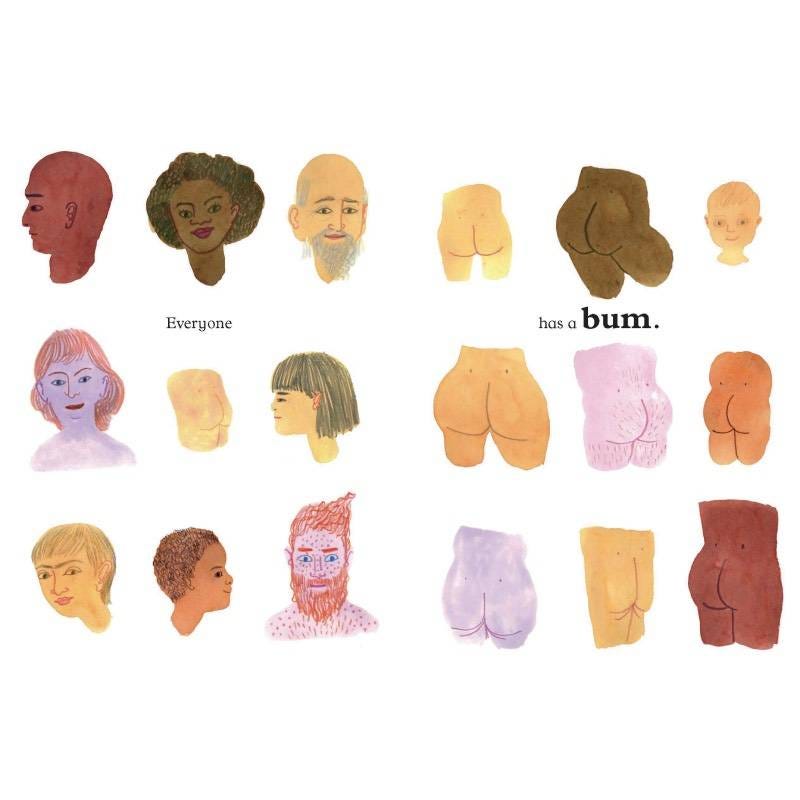
When I saw this image and read the hyperbolic piece that followed on the release of Rosie Haine’s book *It Isn’t Rude To Be
Nude*, something stuck.
Somewhere in all of this sat a question I couldn’t quite shake — one I often ask myself, perhaps subconsciously, as I search for the right words, or euphemisms, or tone to put my patients at ease.
What happens when we don’t have the words for our own bodies?
The truth is, even within medical training, we choose our words
carefully. We soften things depending on the patient, the context, our own unconscious biases. Sometimes that’s appropriate. But it also creeps in and makes us ashamed of our bodies before we even understand how they work. As in this particular drawing by Rosie Haine.
The book’s art and language became especially interesting to me. It
brought up conflicting feelings — first as a mother, then as a doctor. I kept coming back to it, and ultimately it helped me formalise this piece.
The Stiff Upper Lip and Its Consequences
As a frazzled English woman, I feel there is a kind of un-awakening
within our culture. The stiff upper lip reverberates through
generations. Within families, feigned as stoicism, it can *Obliviate* (Harry Potter) memories, feelings, sensations — an erasure of anything too self-absorbed, too dramatic, too uncomfortable. Which doesn’t lend itself terribly well to asking for help. Or complaining. Having a medical complaint just doesn’t sit right with us, somehow, in the UK.
So it was not surprising to read the comments in the Daily Mail
describing the book as inappropriate, sexualised, and so on. The very language used to describe the nude is deemed rude, let alone the artwork itself.
Why does this matter? Why is it worth writing about?
As a frazzled English woman myself — talking about peeing, pooing,and periods becomes messy. Children are taught not to discuss these things openly. Farting brings shame. Wetting yourself on the reception carpet is embarrassing. Then comes our own nakedness, and the disgust in ourselves as we hide our pubic hair, remove it altogether, or cover ourselves even in front of our young children.
I reflect on my own nakedness through my children’s eyes, and it led to a kind of rediscovery. Having small people around the house — my body to them was just my body, without the hidden meanings. Becoming a mother meant taking my body back, Matrescence for me was seeing it through my children’s unselfconscious gaze.
Unfortunately (or fortunately), my body has now officially been packed away again. Shelved into storage, but this time not even for safe keeps. It feels final. My breasts no longer “can tell when it’s raining” (Mean Girls) — instead they are, well, non-existent, and my nipples droop downwards like the flippy floppy hat in the Dingle Dangle Scarecrow. So they 100% won’t be coming back out again.
But anyway, what I am trying to say is this: if I could rewrite
Shakespeare’s “all the world’s a stage” as a woman, it would be less sighing furnace and soldier, and more period pants and Satan’s
panties.
CPR and the Fear of Breasts
Imagine then my own
“glaikit, open-mouthed expression” (Trainspotting)
as I gawked in dismay during my mandatory CPR training, reminded that women are 27% less likely to receive chest compressions than men. And more likely to die from cardiac arrest.
Largely because bystanders are too afraid to touch their breasts. To place hands correctly without being accused of inappropriate touching. Or, if you’re my husband (6ft 5), because of a worry he might hurt them.
I was evidently ahead of the curve, because a few days later the
British Heart Foundation launched their campaign about this exact
point Out of Hospital Cardiac Arrests and the St John Ambulance CPRbra Campaign
Bodies, Language, and Real Consequences
The point is this: images of naked bodies, as fine art drawings, not sexualised in any way, with colloquial labels like “willy” — even sparked a debate. A debate clearly worth having, given women are literally dying because of their mesmerising boobs (or in my case, the lack thereof). I was named “Miley” during the Vicars’ and Tarts’ Course at the Royal Military Academy Sandhurst, for my short hair and, likely, small boobs.
Children are innocent and honest. We shouldn’t ruin that. We should
let them be proud of their bodies, not embarrassed — whilst still
maintaining boundaries and keeping safe. Pantosaurus and his PANTS
I’m reminded, writing this, of reading *The Second Sex* by Simone de Beauvoir as a fresher at St Andrews, with no money and many lonely hours in the old medical school at St Mary’s Quad
”The body is not a thing, it is a situation: it is our grasp on the world and our sketch of our project.”
I think this book enables the reader to see our bodies as parts of a functioning machine, outwith the context of identity. When we
normalise the body through art, and get comfortable with the language, we can describe and interpret — as a GP — the lived experience of ourselves and our patients. In sickness and in health.
And perhaps in doing so, we can confront our own fear and shame. Which brings me to two campaigns from January and February that deserve your attention:
**Birth Trauma** — The campaign spear headed by Louise Thompson to appoint a maternity commissioner
and end the gaslighting of women in childbirth, following on from the Birth Trauma Report by former MP Theo Clarke (Sign the Petition)
**Love Your Cervix** — Encouraging women to book their smear test Cervical Cancer Prevention Week
The Real Cost
I’ll dig a little further, and then I promise to move on.
When our private parts are treated as inherently rude, the cost is
real. I see it in my patients. Women who can’t describe what’s wrong because they don’t have the words. Who hesitate, who delay, who minimise. The lack of fluency to talk about a vagina affects a woman’s ability to advocate for her body — or that of her unborn child. And women are dying.
It shows up too, when passers-by hesitate to rip open a
blouse or tear off a bra because they’ve lost their bearings —
literally, their anatomical landmarks — because of drooping nipples, or breasts, or mastectomy scars. Women are dying.
Combine that with the embarrassment women feel about a smear test —
leading to, that’s right, more women dying, a projected 27% increase in cervical cancer incidence by 2040 Lancet Public Health Oct 2025 — and actually, I feel pretty strongly that we should all get this book by Rosie Haine.
Let’s get talking about all things body, as early and as quickly as possible. Otherwise these prudish, avoidant, restrained generational pressures will mean young people discover their own bodies through manufactured pornography and medical advice from let’s say influencers, and social media BMJ did a great article about this in December .
Art Is Not a Hobby
And so we come back to the centrepiece of this edition. Art.
As my patient Annie Tappenden, a fine artist who drew the portrait of me swimming in Rutland Water below, told me (shared with permission): “Art is not hobby.”
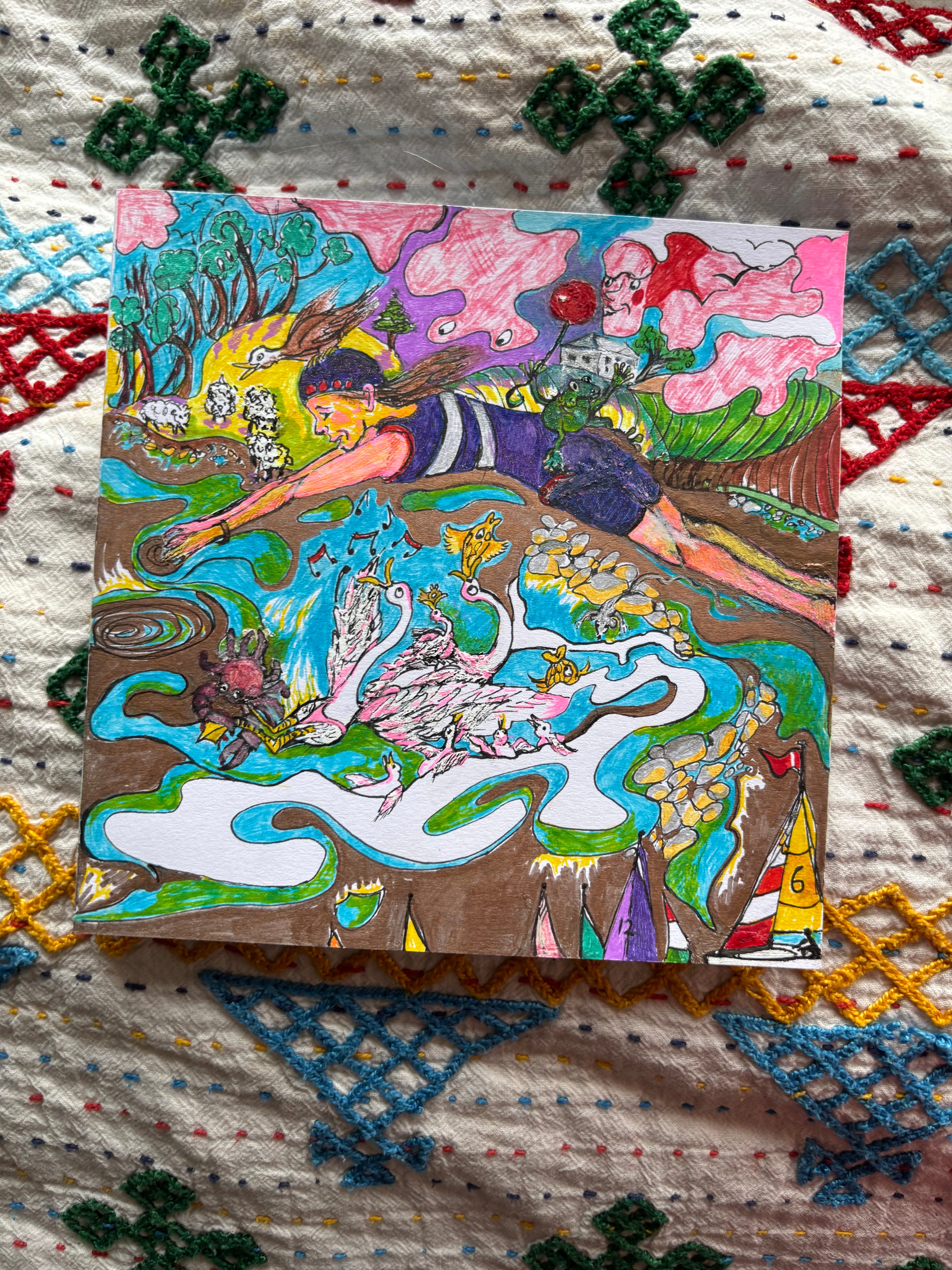
This really does, for me, tie up this ravelled thread. Art — the art of medicine, the art of our body, language, writing, or even as *ars gratia artis* — it matters. Whether as expression alone, with no purpose other than to exist, it enables communication and debate, as this book did so well. So that we, and our children, may advocate for themselves.
The Body Shop
When I was at medical school, I used to study the similarities and
differences between species to test my understanding — phalanges in
the wings of a bird, the flipper of a seal, and how their form is
similar to the hands of a human. This pattern recognition gave me the approach I still use today with my patients. I see myself as a
mechanic, almost. They bring themselves to my body shop, and I have to work out — sometimes with some tinkering, testing, and examination — what could be going on. I don’t return the car to its owner if I don’t think I’ve done my utmost to make sure it’s safe to drive.
The reason I mention this is that even though my parents were, on
paper, equipped to name body parts — one taught human physiology at
medical school, the other was a biology teacher — at home, they
believed that if it was natural, it was good. And if it wasn’t, it was bad the so called, Naturalistic Fallacy by G.E.Moore
As a mother of three, looking back, this became oppressive. I couldn’t discuss or raise my own concerns about my body. There was no acceptable language in the home to refer to my period. I didn’t have much support to manage that early on.
It had its uses. I never felt I could use my period as an excuse.
Because it was “natural,” I thought I just had to get on with it. That made me resilient to the pain. But it also invalidated the experience — the blood loss, the hormonal disruption, the skin changes. It made me feel as a young woman that my body was not an excuse. That menstruating could not be abnormal or pathological or harmful. That perception still ricochets through my life in other ways. Some might see it as strength. But it made me disconnect from myself and from, to a certain degree, my own needs for care, attention, or love.
This interplays with the cervix, birth, and CPR campaigns above.
When we can’t discuss openly what we experience, how do we know it is normal? The reference points get stripped away. From my patients, my own experiences, and those of a mother:
When honesty is combined with discretion — as in one’s home or consultation room — there is safety.
When reserve is combined with restriction, there is hesitation. Delay.
And that delay is measurable. Women are dying, or coming to
significant harm.
We really do need to normalise, proclaim from the rooftops, the names and functions of our bodies. And when we can talk about what we feel, we can be more confident our voices will be heard — not dismissed, as in This is Going To Hurt - pre-eclampsia scene.
What You Can Do
Sign the petition for a birth
commissioner (link here again)
Book your smear test — Love Your
Cervix Cervical Cancer Prevention
Learn CPR — and yes, on women too
(BHF) breasts or no breasts, CPR is the same
Buy Rosie Haine’s book: *It Isn’t Rude To Be Nude* [INSERT LINK to V&A]
If you’ve enjoyed this, please subscribe. And if something here
resonated, I’d love to hear from you — just hit reply or email me at info@busybush.co.uk
---
Until next time — speak plainly, look closely, and don’t pretend
bodies aren’t complicated.
Laura XOXO
---
**References & Campaigns**
*(This newsletter reflects personal experience and professional
reflection and does not constitute medical advice.)*
- Rosie Haine — *It Isn’t Rude To Be Nude*
- Birth Trauma Report — Theo Clarke MP
- British Heart Foundation — CPR Awareness
- St John Ambulance — CPRbra Campaign
- Love Your Cervix — NHS South East
- *The Second Sex* — Simone de Beauvoir
- *This Is Going To Hurt* — BBC adaptation
- BMJ — Social media and health information